


Hospice Care
Is it time for hospice?
Hospice Care Settings
Hospice Care Team
Paying for Care
Hospice FAQs
Hospice Resources
What is Hospice Care?
Hospice is a unique form of care for people facing a serious or life-limiting illness with a prognosis of six months or less left to live. This specialized, compassionate care focuses on alleviating symptoms, relieving pain, and making patients comfortable wherever they are – home, hospital, nursing home, assisted living facility, or the HopeWest Ferris Hospice Care Center. Hospice care is typically recommended when curative treatment is no longer effective or wanted.

Hospice Care
What is hospice care?
Hospice is a unique form of care for people facing a serious or life-limiting illness with a prognosis of six months or less left to live. This specialized, compassionate care focuses on alleviating symptoms, relieving pain, and making patients comfortable wherever they are – home, hospital, nursing home, assisted living facility, or the HopeWest Ferris Hospice Care Center. Hospice care is typically recommended when curative treatment is no longer effective or wanted.
Is it time for hospice? →
Hospice Care Settings →
Hospice Care Team →
Paying for Care →
Hospice FAQs →
Hospice Resources →
When someone you love is suffering with a serious illness and you aren’t sure where to turn for help, we are here for you.
At HopeWest, we focus on supporting you and your loved one with exceptional care, so you can focus on what matters most during this profound time – each other.
The course of many illnesses is impossible to predict. The longer a patient receives hospice care, the better quality of life they will have. The Hospice Benefit requires a prognosis of six months, but only if the illness runs its “usual course.”
The earlier HopeWest is involved, the better outcomes are for both patients and caregivers.

Getting Started

Is it Time for Hospice?
You may know someone who is very sick and needs help, but you just aren’t sure where to turn. It may be time to think about hospice. First, call us. We promise to help in any way we can. With a patient’s permission, HopeWest will work directly with the patient’s physician to determine which type of care is most appropriate.
Someone experiencing the following may be eligible for hospice care:
• Increased visits to doctor, hospital, or emergency room
• Difficulties dressing or bathing
• Treatment side effects with little or no health improvement
• Decreased appetite
• Weight loss
• Depression or withdrawal from loved ones
What Does Hospice Include?
• Pain and symptom management
• Nursing care and medical oversight
• Emotional and spiritual support
• Medication management
• Medical equipment and supplies
• Support for family and caregivers
• Bereavement support after loss
Where is Hospice Care Provided?
Hospice care is available in a variety of care settings. Each patient has their own wishes and circumstances. HopeWest does our best to accommodate each and every patient and family.

Home
Learn More
We know most people prefer to be at home. HopeWest stands ready to help patients be comfortable and well-cared for at home.
Some of the ways we can help include:
• Designing a plan of care with the patient and family to best meet their needs.
• Ensuring the patient has the medical equipment & supplies they need on a regular basis.
• Coordinating with a pharmacy to make sure routine medications are made available.
• Coordinating care with your primary doctor.
• Medical providers are available to make house calls.
• Making routine, scheduled visits by a registered nurse assigned to coordinate the patient’s care.
• An RN available by phone 24 hours a day, 7 days a week who will respond in person when needed to ensure the patient is comfortable.
• Certified nursing assistants who can assist with bathing and personal care of the patient.
• Helping you handle medical bills and working with you to ensure your financial resources are being fully utilized.
• Providing volunteers for social support, transportation, and other needs.
• Offering a non-denominational chaplain to visit at home.

Assisted Living
Learn More
Our hospice care in an assisted living homes provides additional care and resources beyond what is often available.
Hospice care at an assisted living residence is much the same as at home. A custom plan of care is developed for each patient in collaboration with the assisted living facility and HopeWest staff. We work closely with the facility staff, including nurses, therapists, CNAs, and social workers for high quality care.

Nursing Home
Learn More
Our role is not to take the place of the professional staff at the nursing home. We create a collaborative plan of care, and coordinate care between doctors, the nursing home staff, the patient, family and others.
Our nurses and physicians see that every measure of comfort is provided to the patient and they communicate regularly with the primary physician. Social workers and chaplains support the patient and the family. Hospice certified nursing assistants provide regular, additional personal care to the patient.
We believe that one of the most important team members in the nursing home setting is the hospice volunteer. They are specially trained to work with our patients to provide support and quality of life.

Hospital
Learn More
Our hospice care within a hospital can be the most appropriate setting when high levels of tests, interventions and nursing care are needed to keep a patient comfortable. The HopeWest hospice team visits patients in the hospital and ensures continuity of care from the hospital to home, an assisted living residence, or a nursing home, all while supporting their family.

HopeWest Ferris Hospice Care Center
Learn More
Patients receive individualized and specialized short-term care in the Care Center when they have symptoms that are difficult to manage at home. The Care Center is designed to meet the needs of hospice patients and their families during times when a more intensive level of care is needed – a level that is difficult to provide in the home.
Built in 2008, the Mike and Kay Ferris Hospice Care Center is simply extraordinary. Its warm design brings comfort to all who enter. Our building and the grounds are designed for exceptional comfort and caring. Spoons bistro & bakery, located on the lower level of the Care Center, is available not only to patients but also to families and the community.
What is the Difference Between Hospice and Palliative Care?
Hospice and palliative care are very similar, with the main difference being that hospice requires a prognosis of six months or less left to live, and palliative care can be utilized at any point during an illness.
Hospice is for patients who are not pursuing curative treatment anymore, and palliative care is provided in addition to curative treatment. Patients can disenroll from hospice and switch to palliative care at any time if they change their mind and decide to pursue treatment.
| Hospice Care | Palliative Care |
| End-of-life focus | Any stage of illness |
| No curative treatment | Can include treatment |
| Patient with six months or less to live | Anyone living with a serious illness |

Your Hospice Care Team
Exceptional hospice care requires a team approach. We provide doctors, nurses, counselors, social workers, chaplains, nursing assistants, dietitians and therapists who work with you to design a plan of care that meets your unique needs.
Physicians & Nurse Practitioners
We have hospice and palliative care certified physicians and nurse practitioners. Our practitioners specialize in managing pain and other symptoms experienced by patients at the end of life. We may be available to serve as the patient’s primary physician.
Nurses
Most of our nursing staff have earned advanced certification, which assures expertise in symptom management and hospice care. A registered nurse is assigned as the patient and family’s primary nurse to coordinate care. Regular visits are provided to assess the patient’s condition, to provide teaching to the family and other caregivers, and to work collaboratively with facility staff if the patient lives in a nursing home or assisted living facility.
Certified Nursing Assistants (CNAs)
Our CNAs are specially trained and certified to provide comfort and personal care to our patients. If the patient lives in a nursing home or assisted living facility, we work side by side with facility staff to ensure patients receive all the personal and comfort care they need.
Social Workers
Our social workers are trained in both counseling and identifying practical and financial resources for patients and families. We will answer questions, facilitate family communication and provide support to families in person and by phone.
Chaplains
At HopeWest, our spiritual care team is an integral part of a patient’s wellbeing. Our specially trained chaplains provide emotional and spiritual care support no matter a patient’s beliefs. The spiritual care team can help bring patients and families hope and peace during the time of serious illness and at the end of life.
Patient Support Volunteers
Our trained volunteers are individually assigned to patients as requested by the family or care team. Our volunteers provide companionship by listening, reading to a patient or just visiting. Volunteers can be of great support to those spending many hours alone.
How is Hospice Paid for?
Many of our hospice services are covered by Medicare, Medicaid, and private insurance companies. When that is not possible – we’re here for you. Our services are available to anyone in our community regardless of ability to pay because of the generosity of our community.
How does insurance cover hospice?
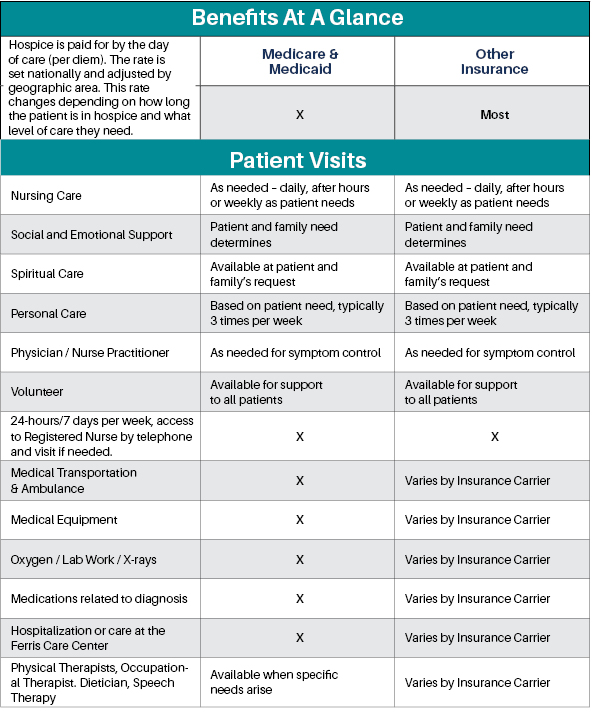
Services not typically covered by the Hospice Benefit under Medicare or Medicaid: curative therapies like radiation or chemotherapy with some exceptions, dialysis, major surgeries, room and board in a hospice facility. These benefits may vary under other insurance providers.
Can I go back to regular Medicare or Medicaid after I elect hospice?
Yes, you can decide to leave hospice care and return to other benefits in an instant. There are also times where HopeWest may discharge a patient because they no longer meet the prognosis criteria for Medicare or Medicaid, want to pursue curative therapies, or pose a safety threat to themselves or staff.
When patients are discharged from hospice or decide to leave (revoke) they are offered a palliative care program to continue to meet their needs.
What is the Medicare Summary Notice I received?
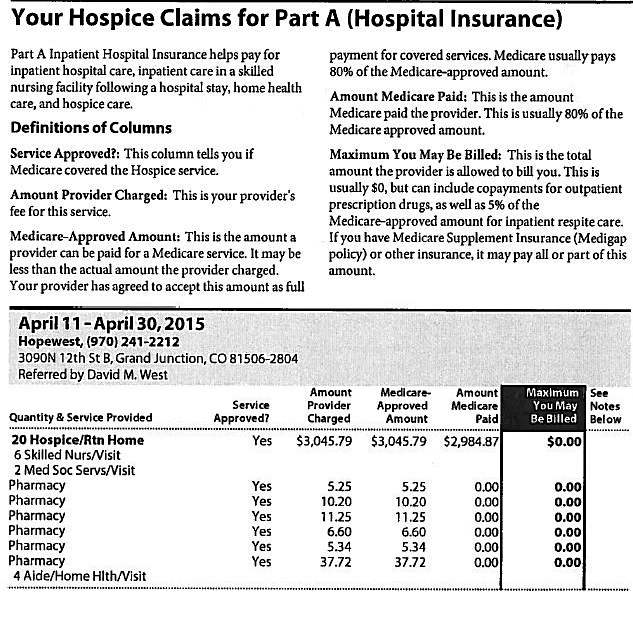
Patients will sign a Hospice Election Form when they are admitted to Hospice and sign a Revocation Form when they decide to leave hospice. Patients will periodically receive a Medicare Summary Notice (see example below) following hospice services.
People find the Medicare Summary Notice form extremely misleading. The notice from Medicare appears to reflect the charges and services rendered to the patient and what Medicare paid HopeWest. However, the notice from Medicare only reflects the visits of some of the staff and medications covered by hospice but no other services. It appears as though HopeWest was paid thousands of dollars in a month for a few staff visits and a few medications when often there are many other costs HopeWest covered as part of that period of time, and those costs are not reflected on the Medicare notice.
Please call (866) 310-8900 if you have questions or need further clarification.
Example of Medicare Summary Notice
Frequently Asked Questions
How long can someone stay in hospice?
In order to be eligible for hospice, a patient needs to have a life expectancy of six months or less. The longer a patient receives hospice care, the better quality of life they will have. Don’t be afraid to ask about receiving hospice care – the sooner you start, the sooner comfort and relief can be provided to both the patient and caregivers.
Can hospice care be stopped?
Hospice care is voluntary and can be stopped at any time. You can choose to disenroll, or be discharged if your condition shows significant improvement. Other reasons to stop hospice care may be if you no longer meet the eligibility criteria or if you decided to pursue curative treatment. If you decide that curative treatment is the right path, you can choose to enroll in palliative care instead of hospice. If you choose to leave, you can always re-enroll if you are eligible.
What happens if a hospice patient improves?
The health of hospice patients sometimes improves due to a variety of reasons. If the patient’s physician does a re-evaluation and determines that the patient will live beyond six months, hospice is discontinued. Palliative care is an option after disenrollment from hospice and if the patient’s condition deteriorates, they can resume hospice care again.
What is the difference between hospice and home health care?
Hospice and home health care can look similar, but they are not the same even though hospice care can be received in a home instead of a facility. Patients in hospice care are not receiving curative treatment – our team is focused on improving comfort and quality at the end of life. Home health care is for patients who have specific health needs such as recovering from an illness, injury or surgery, but do not require admission into a hospital.
Is hospice only for end-of-life care?
Hospice care can begin as early as six months before someone is expected to pass away – it is not just for the last few days or weeks of someone’s life. Early hospice admittance offers improved symptom management with emotional and psychological support. The earlier a patient can enroll in hospice, the better quality of life will be for both them and their loved ones. Call HopeWest at (970) 241-2212 to see if you or your loved one qualifies for hospice care.
How do you qualify for hospice?
To qualify for hospice, the patient must meet basic eligibility requirements which includes a decline in clinical status and a probable lifespan of six months or less. A patient can ask their physician about hospice care, or directly call HopeWest at (970) 241-2212 to request an evaluation.
When should you look into hospice?
If treatments have stopped working, pain and symptom management is difficult, or visits to the hospital or emergency room are more frequent, it may be time to call HopeWest. If your loved one isn’t hospice eligible, they may benefit from one of our other programs. Hospice does not mean giving up, it means that your loved one will have a quality, comfortable, end-of-life experience.
What is the service area for HopeWest hospice care?
HopeWest provides hospice care in Mesa, Delta, Montrose, and Ouray counties and parts of Garfield County. Call (970) 241-2212 to speak to a nurse about hospice.
Why Choose HopeWest?
We have carefully designed a system called The HopeWest Way to provide you with care that you can count on. Our meticulous approach ensures that all our patients’ needs – physical, emotional, and spiritual – are met with exceptional quality, and that families feel supported at every stage.
We would be honored to provide remarkable, life-changing care for you and your loved ones. If you or a loved one need support, call HopeWest at (970) 241-2212.
Resources & Suggested Reading
More Support, Less Stress: Why Timing Matters in Hospice Care
“Call now. Don’t wait.” That’s the message Wilma Erven wants everyone to hear because she’s lived it. Since the passing of her husband, Lee, in 2023, Wilma has made it her mission to share their story and encourage other families to reach out to HopeWest before it’s too late…
read more

The Importance of Early Enrollment in Hospice Care
When it comes to hospice care, timing is everything. It’s a difficult topic to discuss, but an essential one. Yet, many people wait until the last stages of their illness to learn about their hospice options, missing out on the significant benefits it offers. All too often, we at HopeWest hear…
read more

Family & Caregiver Tips
Sharing a person’s final days, weeks or months of life may be difficult. During this time, the people we love need our support and care. Sometimes it is helpful to know what to expect and how we can better communicate with the person who is facing this unique time in life…
read more
Medication Resources
Learn more about how to administer different types of medications as well as common uses and side effects of medications used in hospice care…
read more
Making Your Wishes Known: Advance Directives
You make choices on a daily basis. Perhaps one of the most important choices facing you is your choice for future health care. Who decides when enough is enough? You do. It is not easy to consider the kinds of events that turn life upside down, but that is what advanced care planning is all about…
read more

Nutrition at the End of Life
Food is often at the center of all we do—holiday feasts, birthday cakes, dinner with friends. Aside from being a basic human need, food entertains and even comforts. Most importantly, food gives us energy and plays a role in keeping us healthy. However, when a body…
read more